Rethinking Suicide: The Book That Inspired Our Mission

Rethinking Suicide: The Book That Inspired Our Mission

The last time I saw my brother Adam alive was in August 2023, two months before he died.

I had gone to visit him in Gillette, Wyoming. Adam was struggling. He was very withdrawn and very down. It was clear that he was going through an incredibly difficult period in his life.

During that visit, I somehow ended up tackling his garage.

It was overflowing with boxes, bags of clothing and belongings that had accumulated following his divorce and move into the house less than a year earlier. I spent much of my visit completely reorganizing it.

Looking back, I think organizing his garage was partly my way of trying to help when I didn't know what else to do. Organizing things comes naturally to me. I enjoy it. It was something tangible I could fix at a time when I couldn't fix what Adam was going through.

At one point, Adam thanked me for everything I was doing. I told him, "Adam, I'm not doing anything that's difficult. This is easy for me, and it makes me feel like I'm helping you in some small way. You're the one doing the hard work."

And he was.

What Adam Was Going Through

Adam had been diagnosed with depression and prescribed medication, but he had stopped taking it because he didn't believe it was helping him. Based on patterns we had observed over the years, our family also came to believe that Adam may have had undiagnosed bipolar disorder, which can require a different approach to treatment than depression.

He could go through periods of extraordinary productivity and energy, followed by periods of deep depression, withdrawal and sometimes paranoia.

Desperate to find something that would help, Adam began doing extensive research on his own and self-medicating with drugs he wasn't prescribed, including ketamine obtained illegally through the dark web. This wasn't simply a case of a recreational drug user unable to stay sober. Adam was trying, however dangerously, to find something that would make him feel better when the treatment he had been prescribed wasn't helping.

Getting professional help wasn't easy, either. Access to mental health care in a small town like Gillette was extremely limited. The only system available to respond was the criminal justice system, whose job was to impose consequences when someone broke the law. But what Adam desperately needed was access to a mental health professional who could provide support and treatment.

His self-medication began creating serious consequences in his life. On more than one occasion, Adam took a combination of pills that left him impaired. Those incidents resulted in DUI charges and jail.

After that, Adam was required to submit to random drug testing. He knew that a failed test would result in a bench warrant for his arrest. We learned that in the days before his death, he had taken a drug test and failed it.

After Adam died, I could see on his laptop that he had repeatedly refreshed the online police warrant page, waiting for his name to appear. Eventually, it did.

This was exactly the kind of outcome Adam had feared when I visited him in August. He talked about the devastation another arrest could cause. He believed he would lose everything: his freedom, his ability to drive, his income, his home and, most importantly, his sense of self-worth, especially when it came to his role as a father.

Adam had tried to get help. He had made an appointment to see a mental health professional, but the earliest appointment he could get was nearly two months away.

In October 2023, Adam died by suicide from an intentional fentanyl overdose.

His appointment was scheduled for one week later.

No diagnosis, event, checklist of signs or simple explanation accounts for what happened to Adam. What I understand now, but didn't understand then, is the complexity and unpredictability of suicide.

Saying Goodbye

I traveled back to Gillette alone that October.

My father-in-law had died the day before Adam. Our family was suddenly planning two funerals at once. My husband needed to be with his family, my children had school, and I needed to be with Adam.

By the time I arrived, so much of what was happening felt procedural. As Adam's next of kin, I was doing all of the things that had to be done when what I really wanted was to collapse on the floor, wake up from this nightmare and have my brother be alive again.

Once Adam's body had been released to the funeral home, I went to see him one last time. 

For a moment, I could touch his face and his hair and see Adam. My baby brother. So handsome, his face peaceful, like he was asleep.

But he wasn't sleeping. I couldn't wake him up. It was awful and surreal and devastating. I am grateful that I got to see him, touch him and say goodbye. 

Then I had to walk out of that room and return to everything that still had to be done.

Grief is the gap between your mind understanding that a person is gone forever, and your heart unwilling to accept it. 

One Decision I Later Changed

There was another decision I made in those first days that I would later revisit.

We initially did not identify Adam's death as suicide on his death certificate.

At the time, I was his sister signing paperwork in the midst of a horror that I couldn't believe was happening. I wasn't thinking about public health data or suicide research. I was trying to get through something that didn't feel real.

Later, as I began learning more about suicide, I learned that suicide deaths are underreported or misclassified for many reasons. I realized that, in a small way, Adam's death had become part of that problem.

So two years after his death, we went back and had his death certificate changed.

I didn't want Adam's death hidden from the statistics. If we are going to understand the scale of suicide and figure out how to prevent it, we have to be willing to count it accurately.

Learn more about suicide facts, statistics and common myths

Adam's Memorial

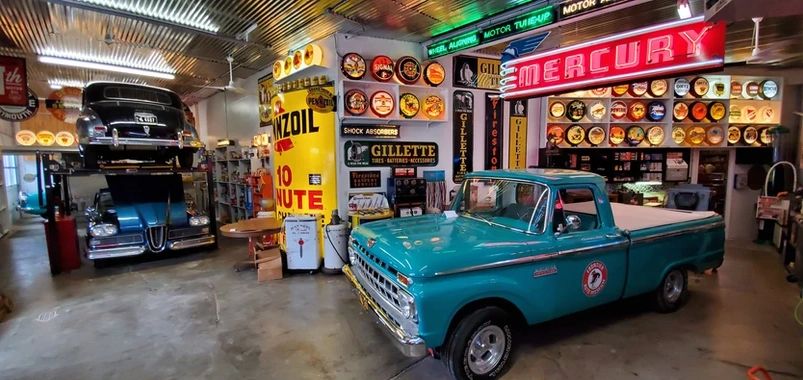
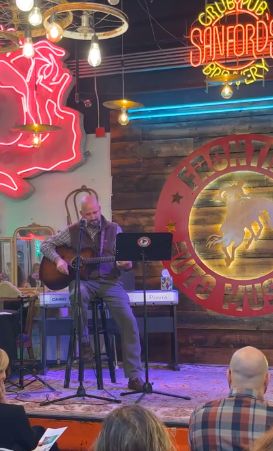
A week later, we gathered at the Frontier Auto Museum in Gillette, where Adam would often go for their open mic night, to do what he loved most. He played music, sometimes alone, sometimes with fellow musicians who had gathered together over the years and become friends.

Many of them were gathered that night. Adam's daughter and her mother were there, along with other friends from high school and college and members of our extended family who had traveled to Wyoming to say goodbye.

We listened to stories. We laughed. We cried. We listened to Adam's fellow musician friends play the music he loved.

Then Adam's daughter, my niece, stood up to speak about her dad.

She was only 10 years old.

Watching a little girl stand in front of a room full of people and have the strength to put into words what her father meant to her was simultaneously gut-wrenching and beautiful.

Adam's final resting place is a small, beautiful plot on a hill beside a stream, overlooking Gillette's sunsets.

After that day, it was time to go home, where nothing would ever be the same, where shock turned to grief, anger, guilt, like a heavy weight that keeps rolling around on your chest, making it difficult to breathe. 

From Grief to Questions

Seeking understanding and answers, I looked for one source of truth about suicide.

Instead, I found countless organizations, programs and approaches, but few clear answers about what was actually proven to prevent suicide.

Then I looked at the numbers. Nearly 50,000 Americans die by suicide each year. But the more I learned, the more I realized that the problem isn't a lack of awareness. The problem is our inability to prevent it. 

Suicide is extraordinarily difficult to predict. People who are suicidal don't necessarily display recognizable warning signs. Not everyone who becomes suicidal is depressed. And some of the things we commonly believe about suicide and suicide prevention aren't supported by the research.

I had spent months looking backward, trying to understand how Adam had reached a point where death seemed like the only way out, and whether anything could have changed what happened.

One of our family members who traveled to Gillette was our cousin Steve. He was my brother's best friend, and more like a brother than a cousin: Steve and Adam, born just weeks apart, remained extremely close. Few people knew Adam better.

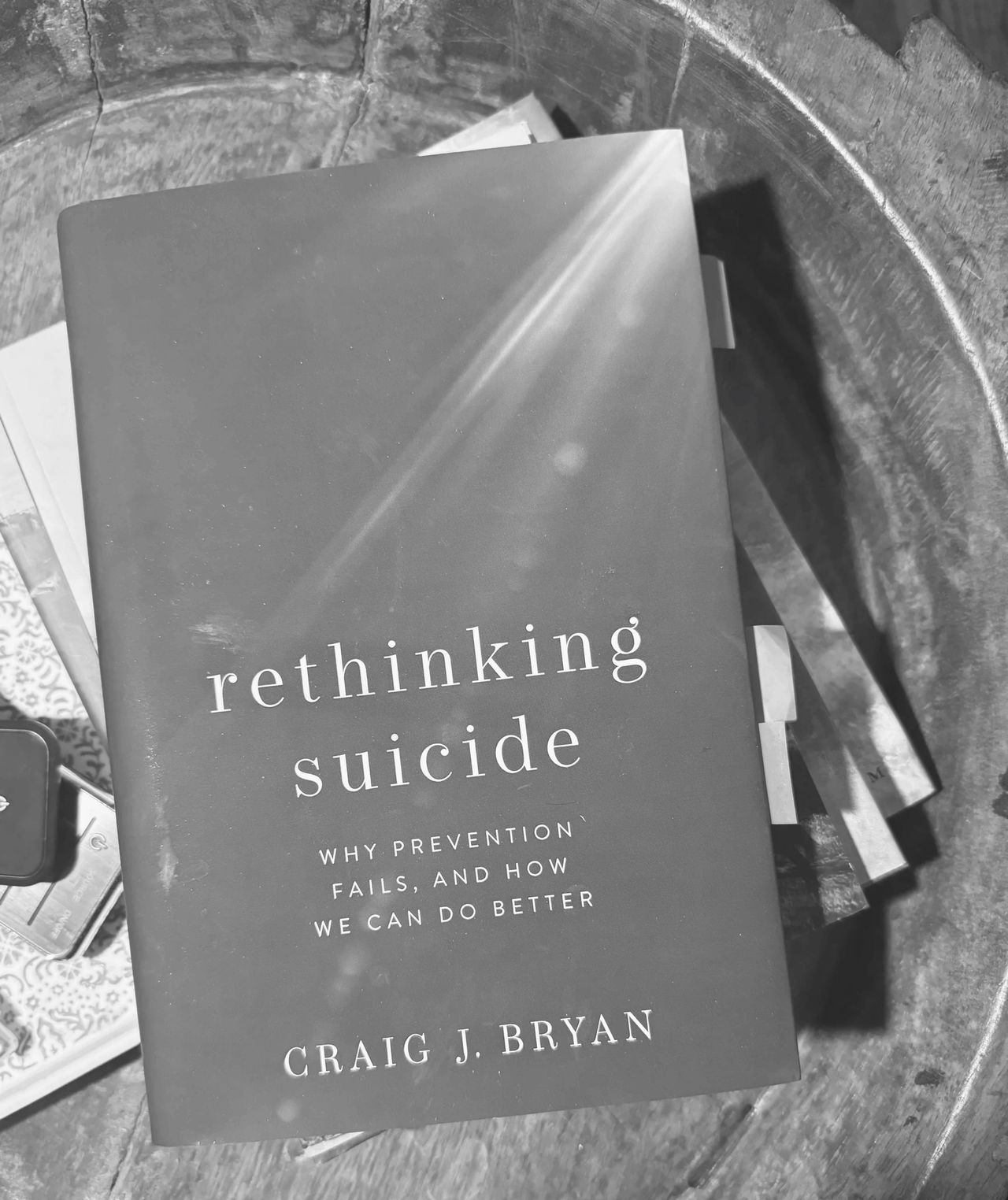
After Adam died, Steve sent me a book: Rethinking Suicide: Why Prevention Fails, and How We Can Do Better, by Dr. Craig J. Bryan.

Steve and Craig had known each other since high school. After I read the book, Steve introduced us.

That introduction would ultimately change the direction of my grief and become the beginning of Love You Adam.

Rethinking Suicide

Craig's book challenged much of what I thought I understood about suicide prevention.

For decades, much of suicide prevention has focused on identifying who is at risk: looking for warning signs, assessing risk factors and trying to predict who might attempt suicide.

But suicide is extraordinarily difficult to predict.

Dr. Bryan's work offered a different way of thinking about the problem. If we cannot reliably predict exactly who will attempt suicide or when, prevention cannot depend entirely on our ability to identify the right person at the right moment.

Instead, we can put greater emphasis on interventions that have actually been shown to reduce suicidal behavior.

For me, that distinction was profound.

I had spent so much time trying to understand what had happened to Adam.

Rethinking Suicide helped me begin looking forward.

Because buried within all of the painful statistics and limitations of suicide prevention research was something I desperately needed to know:

Suicide can be prevented.

There are interventions supported by evidence. There are things we can do.

That realization became the foundation for Love You Adam.

From a Book to a Mission

What began with a book eventually became a partnership.

Today, Love You Adam works with Dr. Bryan and his team to expand access to Crisis Response Planning (CRP), a brief, evidence-based suicide prevention intervention supported by multiple randomized clinical trials.

CRP helps a person recognize when an emotional crisis may be developing and identify personalized strategies for navigating it safely. Research has demonstrated significant reductions in suicidal thoughts and behaviors among people receiving CRP and related interventions.

Learn more about Crisis Response Planning

But knowing that effective interventions exist isn't enough.

Clinicians have to know how to use them.

Putting Evidence Into Practice

Love You Adam funds Crisis Response Planning certification training for mental health professionals, helping remove cost as a barrier to specialized suicide prevention education.

Training clinicians doesn't solve the shortage of mental health professionals in communities like Gillette where mental health resources are extremely limited. Adam tried to get professional help. He waited nearly two months for an appointment he would never live to attend. But training does help address another critical gap: making sure that when someone does reach a therapist, that clinician has evidence-based, suicide-specific tools they know how to use.

That's why Love You Adam funds training for clinicians and entire clinics that otherwise could not afford it. It is our singular mission. 

And as a result of our work, hundreds of mental health professionals across the United States and Canada have now received CRP training through Love You Adam.

And the impact doesn't stop with the clinician. Once trained, that therapist can use CRP with people at risk for the duration of his or her career.

Learn about Love You Adam's CRP training

Find a CRP-trained therapist

Why Love You Adam Exists

Adam's death will always be the reason this organization exists.

I would give anything for a different ending to his story.

But what I found while searching for answers after losing him gave me something I wasn't expecting to find: a reason for hope.

We have tools that prevent suicide.

We have clinicians who want these skills. 

And now we have a tangible way to put those skills into their hands.

That is the work of Love You Adam.

Help us train more mental health professionals.

I am forever grateful for your support. 

Love,

Maggie
President & Founder
Love You Adam

Share This Post